Fundamental Gun Handling Videos: Part III, Safe Gun Handling

I was talking with a friend of mine the other day.  My friend is a USPSA Chief Range Officer, and over the course of her time as an RO and CRO, she has run literally thousands of shooters through various courses of fire.

She said something that I agree with completely:  “Within a few seconds of them drawing their gun from the holster at Make Ready [when the competitor can draw their firearm, make ready, and prepare to start the course of fire], I already know how good they are going to be–and how safe they are going to be.”

Pretty much every experienced range officer in the action shooting sports will say the same things—the minute you touch your firearm, we can see what sort of gun handling safety habits you practice.

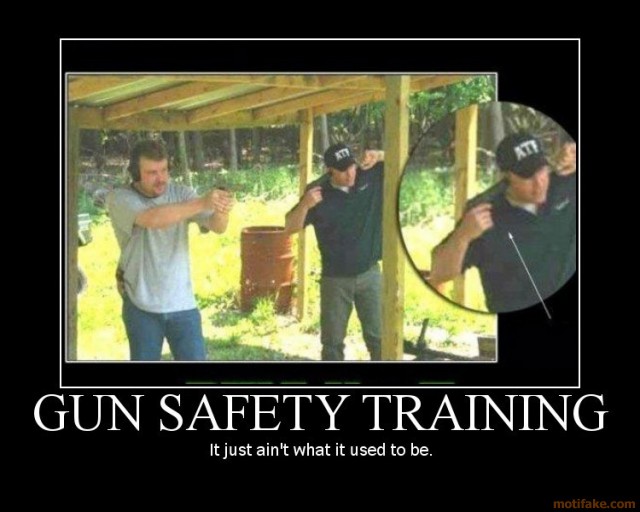
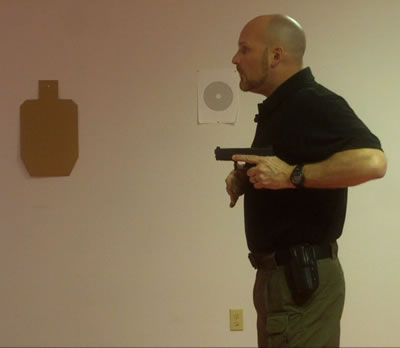
Or don’t practice, as sometimes is the case.gun-safety-training-stupid-gun-safety-training-demotivational-poster-1266003554Hence, this video:  the third in the series of Fundamental Gun Handling Skills, this time on SAFE GUN HANDLING.

I originally made myself a couple of notes about the four main things I wanted people to work on for safe gun handling, got in front of the camera, took some video, went home and edited it–and realized the video was almost 20 minutes long.  The more I talked, the more I remembered safety issues and EXCUSES I’ve heard over time from people attempting to justify their unsafe actions.

  • “This is the way I was trained!”
  • “It isn’t loaded!”
  • “It wasn’t really pointing at you!”
  • “I haven’t had any trouble doing that before.”
  • “No one ever said it was a problem!”
  • “My finger was off the trigger!”

…and of course my all-time favorite (and yes, I’ve actually heard this one) “I know what I’m doing, this is REAL self-defense training.”

I don’t know about you, but I consider self-defense training “real” when it also teaches me to NOT SHOOT MYSELF.

So I went back to the studio and tried to just pick the main things, the most important things, the things that will hopefully make the MOST difference in terms of safety.  And I managed to get the video down to 10 minutes.  It still is pretty long for a YouTube video with some guy just standing there talking at you, so I’m pretty sure most of the people who really need to watch it (and take it to heart) probably won’t do so.

But I tried.  So here it is.  It isn’t everything you should do, there are plenty of other things I could have said, plenty of other habits of good practice I could have included—but I tried.

Make safe gun handling something you do automatically, all the time, without fail.  Make it such a habit that if you do something UNsafe, it will feel strange and wrong, and you won’t like doing it.  That way, under stress when your brain isn’t working right—you WON’T do it wrong.


There is so much more we could say.  But if nothing else, if people would just keep control of the gun with their strong hand, keep their finger pinned to the frame/slide when not actively shooting, and control their muzzle, that would be GREAT.

ALL THE TIME.

Posts in this series:

Hey, Special Snowflake!

A little while back, I got sent a link to this article ( Why We Suck ) discussing beliefs, training, and practice.  It resonated with a couple of things I’d been thinking recently (based on someone telling me that since they’d been carrying for awhile they didn’t need a scenario-training class in CCW) along with some other articles by Claude Werner and the Defensive Daddy which resulted in this post.

So here you go.  Some truth you probably don’t want to hear:

You aren’t a special snowflake.

If you aren’t a competition shooter, then you probably aren’t as good at shooting as you think you are. (If you are a competition shooter, that doesn’t mean you are automatically good—but it DOES mean you probably have a pretty good idea of how good you are.)

If you’ve never done scenario training, then you probably aren’t as good at self-defense as you think you are. (If you have done solid scenario training, that doesn’t mean you are good at self-defense–but it DOES mean you probably have a pretty good idea of how you will react in stressful situations, and how quickly things can occur.)

Special Snowflake
For some people (a small small tiny few), this won’t be true. But for most people (and yes, this means you no matter how much you think you are the Special Snowflake that is one of those small few)–if you’ve never actually done anything that forced you to perform under stress and had that performance critiqued and compared to others, then you really have no idea how good you are.

And most likely, it isn’t nearly as good as you think.  Matter of fact, it’s probably pretty bad.

Don’t believe me?  Okay–actually put your Dunning-Kruger-ed self out there and find out.  Shoot a Steel Challenge match.  Shoot a USPSA match.  Take a scenario training class.  Take a force-on-force course.  Put yourself on a timer, and find out if that “fast draw” of yours is actually what anyone ELSE would call fast. Try to hit those 8″ steel targets at speed from 20 yards. What you learn will be important.

Maybe you’ll learn that you really ARE as good as you think you are.

More likely, maybe you’ll learn that if you want to actually be able to defend yourself and your loved ones, you’d better practice, because you aren’t nearly as good as you think you are.

And isn’t that something you’d like to find out BEFORE it becomes important?

Everyone thinks they are above average, everyone wants to be the Special Snowflake that really IS that good.  Well, chances are you aren’t.  And if you haven’t tested yourself, you have no way of knowing.

Fundamental Gun Handling Videos: Part II, The Grip

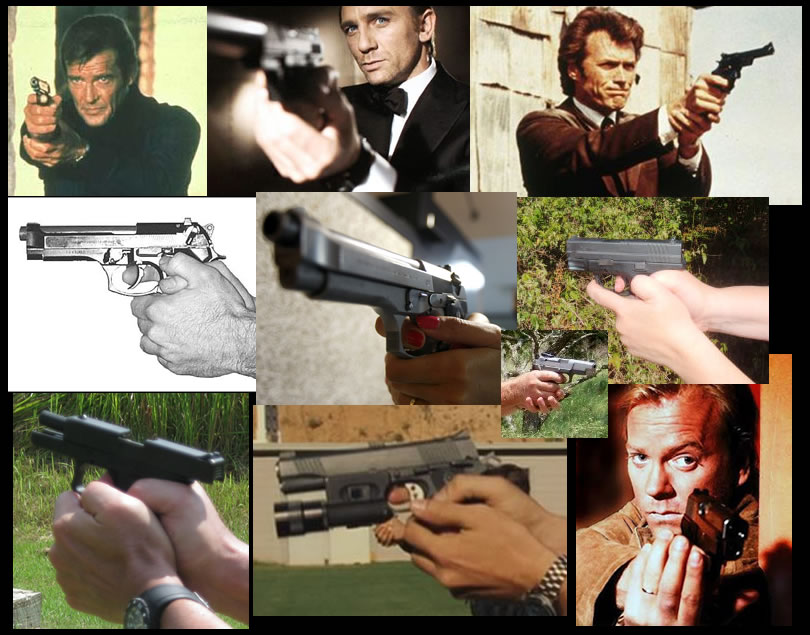
One of the things I tend to see quite often from people who “already know how to shoot” is a poor grip.  Whether that grip was “learned” from movies, TV, a family member, “this really good shooter I know” or whatever I have no idea, but often it is simply a bad grip.

Having a good grip is very important in terms of shooting well.  Sure, it is possible to be both accurate and fast with a poor grip.  However, it is highly UNLIKELY, and chances are you simply can’t do it.  And more importantly, you won’t be accurate when it is incredibly important such as when you are using a firearm to save your life.

The problem is, it seems so simple that many people don’t think about it–which means they simply do it wrong.  Now, there are a number of versions of a “correct grip,” and while in my video I suggest a specific one, I do talk about how there are several variations on it. As I say, the correct grip for you depends on your hand size, grip strength, firearm choice, and grip dimensions and shape.  The grip I suggest in the video can be easily modified based on those variables.  (And if you can’t make it work—probably that gun simply isn’t for you.  There are physical limits, and if the grip needed to be fast and accurate exceeds them, it simply isn’t going to work out.)

Outside of those variations, there are unfortunately a number of other grip types that are simply very WRONG–so if you are using a teacup grip, a wrist support grip, a grip (on a semi-auto) where your weak-side thumb is wrapped around the back of the gun, or a thumbs-locked-down grip, then I’m afraid that yes, you are doing it wrong.

DON'T GRIP LIKE THIS!

DON’T GRIP LIKE THIS!

The good side is that you will be able to increase your shooting ability significantly merely by fixing your grip.

 I meant to only have this video be a couple of minutes long, but the more I explained the details, I more I kept remembering all the questions, complaints, and “explanations” I’ve heard for other grips over the years, and I wanted to make sure I addressed at least some of those.

Having me just say “do this because I say so!” isn’t really convincing.  So, I wanted to talk about WHY a proper grip makes a difference, and why improper grips cause issues.  As such, the video ended up rather longer than I originally meant….hopefully it keeps your attention well enough to be useful.

(Note:  this video isn’t about your stance.  We’ll get to that one later.  This one is simply about how you are holding the gun in your hands.)

Posts in this series:

Fundamental Gun Handling Videos: Part I, The Draw

We’ve decided to start a series of short Fundamental Gun Handling videos on YouTube, with the idea of pointing out some of the most-common errors we see (and their fixes!) with respect to the fundamentals of gun-handling.

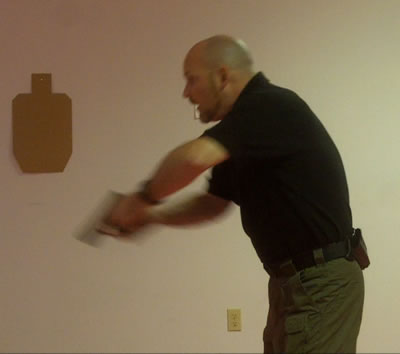
We posted the first video today, and it is about the draw–specifically, how to make sure you aren’t using a fishing draw or a bowling draw.  (Go to any range, and you’ll see numerous examples of both of these things.  Makes any competent shooter cringe.)

As is probably obvious, I shot this really quickly when I had a free 30 minutes before teaching a class, my voice isn’t working properly, and obviously I had no script and was doing it off the top of my head.  [sigh]  Hopefully, it still makes sense–and most importantly, I hope that the FIX for bowling and fishing draws is clear.

Don't go fishing!

Don’t go fishing!

No bowling!

No bowling!

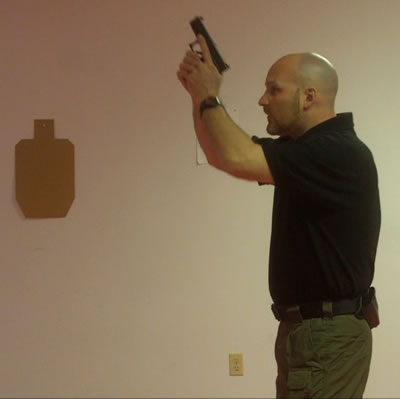
It really is simple—snap your wrist up to point the gun at the target immediately after the gun leaves the holster.  That’s it.  So quit doing bowling draws or fishing draws!

Get that gun pointed at the target right out of the holster!

Get that gun pointed at the target right out of the holster!

More videos to come, with hopefully good content on fixing fundamental gun-handling skills.

Posts in this series:

Changes in PRT Classes, and the 2015 Schedule…

Well, it’s a new year, so of course we’ve got some new things going at Precision Response Training

First off, some good news: For the past couple of years there has been a lot of requests for more short seminars–so that’s what we are going to do.  We’ve started by scheduling three in the first half of the year, and we are planning on at least two more for the remainder.  The topics for the first ones are already set, but while we already have some ideas in mind for the last two, we will entertain suggestions–so if there is anything in particular you want to do, let us know!  (Seminar dates:  Mar 28, Apr 25, May 09.)

Second, as we’ve been teaching the Handgun Techniques and Shooting Skills courses, we’ve found that not only can they be taught at the same time, but also that the people who have signed up for fundamentals analysis (Shooting Skills) could have significantly benefited from some dryfire instruction on technique prior to the live fire section of the class like what happens in the HT course.  In many cases, we see that with a short amount of dryfire work prior to the range time, we could have shortened the time for the improvement process on specific fundamentals.   So—the Handgun Technique course and the Shooting Skills courses have been combined into a single 1.5 day course.  The initial evening will be dryfire in the classroom to work on specifics of fundamentals, and the next day will be on the range the entire time.  (This hasn’t changed for the HT students, but it does add some good dryfire work for the SS students.)

Third, we have put up the schedule of classes for PRT courses through May.  While we’d LIKE to be able to offer a CCW State course every month, we have a limited amount of time and we’ve decided that our other courses are more important–because you can find CCW courses all over the place (and if you can’t take mine, among others I recommend Chris Zeeb at Nebraska CCW Training) but you can’t find our Handgun Technique/Shooting Skills, CCW Lifestyle, or Defensive Tactics/CQT courses anywhere else.  (Though I have been amused at how several other trainers locally have added practical CCW courses scenario training and other aspects of the CCW lifestyle since I started teaching my course. And suddenly CQB-with-combatives have appeared, too. Hm.)

Lastly (here’s the bad news) due to changes in available resources and general costs, I’ve had to raise a few of my class fees.  Seminars are now $40, HT/SS is now $145, and the CCW Lifestyle and Introduction to Handgun courses are now $95.  For those last two, I kept them ridiculously cheap as long as I could (truthfully, $85 is a stupid amount for me to charge for a 1.5 day course in which I have to buy required student packets plus use a huge amount of equipment plus supply ammunition for all students) because I feel that people need VERY BADLY to take those classes.  And I haven’t changed the cost much–only $10 more.  But that SHOULD help me continue to be able to offer those classes because I’m not losing quite so much money on them.

So, get yourselves to the PRT Schedule/Registration page, and sign up for some classes!

Schedule for Jan 2015 – May 2015:

  • Feb 07:  CCW Lifestyle
  • Feb 28:  CCW State Course
  • Mar 13-14:  Introduction to Handguns
  • Mar 28:  Pistol Skills Seminar
  • Apr 10-11:  Handgun Techniques/Shooting Skills
  • Apr 25:  Competition Seminar
  • May 09:  Tactics Seminar
  • May 30:  CCW State Course

(I’ll be adding more details about the seminars later this week…)

What Gun?

I don’t care what gun you buy.  Really, I don’t.

—Well, I DO, but I’m only going to bother making suggestions or talking with you about it if you are going to 1) actually listen and act on my advice, and 2) plan on having your firearm be more than a talisman held to ward off evil things.

Lately, I’ve seen all sort of people asking some version of the extremely common question:  “What gun should I get for self-defense/carry/home defense?”  Variations on this also include “What gun should I suggest for my friend…” and “What gun is BEST for….”

Gun1After which, you get the common answers of “revolver, because reliable” or “.380, because less recoil” or “.45, because stopping power.”  (Though my favorite is “Jiminez, because you don’t need to spend that much–you’ll only shoot it a couple of times.”)  A couple of groups I’m in have a lot of these conversations happening.

And almost all answers to questions of this type are nonsense, from people who have no idea what they are talking about with respect to firearms (though they are completely well-meaning!) who also don’t understand anything about ballistics, violence, and self-defense.

If someone gives an answer before anyone asks the following questions, then those answers are nonsense that may not be even remotely relevant:

  1. Is this for daily carry, range practice, or home defense?
  2. What experience do you have with guns?  With rifles, shotguns, or handguns?
  3. Are you actually going to practice with this?

There are of course more questions needed if you really want to help someone choose a good firearm for their situation–but if no one has asked even those basic three, then no one has any idea what they should suggest which means that their suggestions ONLY relate to what THEY happen to like no matter how much those suggestions are completely inappropriate for the situation.

So if you ask me–sure, we can have a conversation about finding an appropriate firearm for your needs and requirements that is reliable and accurate for you to use competently under stress.  I am happy to talk guns, and am fine with helping you choose one that fits your needs as well as possible.

hipoint0But if you aren’t going to practice with it, or don’t plan on actually following my advice because you actually just want validation of your own choice (most likely based on cosmetic details and marketing hype)—we don’t need to actually talk about it.  Sure, go buy that Judge.  Or that Jiminez.  Or that Hi-Point.  Whatever. If you have it on you and can get it out in time during a self-defense situation, and it goes bang at least once, it really won’t matter which one you have.  All guns will be equally poor choices for you. You’ll be equally as unlikely to hit anything no matter what gun you have, and many self-defense situations end with just showing the firearm or after the first (defensive) shot.  So you’ll have a chance at getting equally lucky with your defensive actions no matter what gun you decided to buy.

People ACTUALLY interested in self-defense wouldn’t rely on that, of course.  But those people would practice and make good choices with respect to equipment.  If you aren’t one of those, and plan on having your firearm-shaped talisman simply create a magic bubble that doesn’t allow evil near you…

…buy whatever you want.  I can’t help you. So I don’t care what gun you get.  (If I did care, all it would do is frustrate me because you aren’t actually interested in being able to defend yourself.  You think that the gun will do that for you, and I can’t help that type of thinking.)

So I don’t care what gun you buy.


I have to include the Dynamic Pie Concepts Ultimate Hi-Point video, because it is brilliant.

What do you need to CCW?

The difference between NEED and WANT is that need means “required.”  Wants are not required.

So what do you NEED if you want to CCW?

Not much, really.  Gun, ammo and appropriate carrier, holster–that’s the equipment.  Your state’s version of a permit.  Some type of clothing that’ll cover the gun.

And that’s it.  That’s all you need to carry a concealed firearm.  You have a right to self-defense, you have a right to use appropriate tools for self-defense—and that’s all you need.

This, however, is completely separate from whether or not that will 1) help keep you and your loved ones safe, and 2) keep you out of jail or civil court due to your actions.

If you want those things (or at least, a better chance of doing those two things), then you are going to want more than what you merely need.

Think you already know how to use a gun?  Okay—how do you know?*  Have you actually rated yourself in terms of pistol skills, using common drills and metrics?  How’s your safety practice?  What’s your skill level on draw speed and accuracy?

Think you already know how to defend yourself?  How do you know?*  Have you studied self-defense tactics?  Gotten training in effective choices?  Can you protect your loved ones in your home and outside?  Do you know how to recognize incipient violence, and how to de-escalate?  Do you know appropriate choices to handle violence?  Where did you get that information?  Have you ever had stress-based training?  Scenario training, force-on-force practice?

Think you know the laws regarding use of force and self-defense? How do you know?*  Can you recognize lethal force situations?  Can you recognize when lethal force is NOT a legal choice?  Do you have other response choices available to you, or are your choices either “gun” or “nothing”?

There is a lot more to carrying a concealed handgun for self-defense than simply “having a gun on you.”  Sure, that’s really all you need.

But it shouldn’t be all you want.

——

HowDoYouKnow*Notice how often I’m asking “how do you know?”  I’ve found that many, many people who say “I’m a good shot” or “I know how to defend myself” are just guessing–they really don’t know.  They’ve never gotten training in self-defense, they’ve never tested themselves objectively–they actually have NO IDEA.  Luckily for them, most of them will never get attacked, especially with a lethal level of force, so they’ll never have to find out that their abilities just aren’t that good.  It will mean that people around them will have to put up with them acting like skilled experts, though, even though they aren’t. Hm.  I think I may need to write about this more in a later post.

——-

Edited to add, due to a NUMBER of messages I’ve gotten  (5.  So far.)  :  Yes, I know the graphic is logically incorrect.  Quite so, actually!   What makes it funny is how people understand exactly what it means (very clearly) even though what it SAYS makes no logical sense.  (And it is so clear, even though it is obviously wrong, that many people miss the fact that it is wrong.)

And yeah, I didn’t make it clear that I knew that, and no one knows my sense of humor, so of course people think that I can’t read Venn diagrams.  Fine, fine.  {sigh}

Edited to add more, because I got to thinking about why this diagram makes so much sense to people, even though it is logically possible.  (You can’t know and not-know something at the same time..):

If you treat it from a statement case, instead of a meaning case, it really IS logically consistent.  After all, if there is something you know and you don’t know, either:

1) you don’t know you know it, or
2) you know that you don’t know it

This diagram picks only one of those to go with.   (The first one.)

In terms of meaning, then yeah, logically you can’t know and not-know something.

You could think of it in terms of operators, instead of cases:  This circle contains a group of things.  The operation is that we know this group of things.  This other circle’s operation is that we DON’T know this group of things.  If an item is in both circles, it depends on which operation we apply first:

We don’t know this thing, and we know it.  (don’t know operates first)
We know this thing, but we don’t know it.  (know operates first)

“Know” of course also meaning realize.  (We realize that we don’t know this thing.  We don’t realize that we do know this thing.)

That probably is why this diagram is so clear to people, even though from a meaning perspective it is impossible.  From an operation or status perspective, it makes perfect sense.

How’s your ego?

One of the things I’ve observed while teaching firearms is that in general, there is a significant difference between teaching women and teaching men.

Teaching women is normally pretty easy:  They generally start under the assumption that I know more than they do, they try to perform the shooting techniques as I’ve taught them, and they don’t randomly add extras to their technique because they think they know how to shoot better.

Teaching men is often annoying:  They start with the assumption that they are already competent shooters, they generally attempt to “adjust” the technique I’ve given them because “they know what works for them” and often they make decisions about whether or not they should practice a particular technique or use it based on whether or not “it feels right for them.”

In other words, many men seem to think that genetics has given them an innate understanding of firearms, that plinking at a pop can at 15 feet with a .22 rifle has trained them in solid technique with a firearm, and that their perusal of YouTube videos of High-Speed Operators(tm) teaches them how to Operate since said videos are exactly like what happens in reality.

I wish I was kidding.

Now, this isn’t universal—one particular female comes immediately to mind, who used a bowling draw and a teacup grip to shoot slow-fire at a full-size silhouette at about 10 feet, and when I suggested some different techniques, assured me with strong confidence that this is how she was trained in law enforcement for high-speed shooting.

And plenty of guys actually listen and learn perfectly well.

Nonetheless—it is certainly true that EGO is alive, well, and Operational in the world of shooting.  So–how’s YOUR ego?

Do you have a healthy ego that drives you to be a better shooter?  (There is an assumption here that you want to be at least a competent shooter.  If you don’t, then never mind.)  Or do you have an EGO that requires you to defend it often, that gets in the way of admitting to error that can be fixed, that means that not only will you not ever learn to be better, but won’t even test yourself for fear that you might fail in front of others?

I was talking with a female shooter I know, and she told me about a discussion she had recently.  She was talking about competition shooting to a guy who was “training” a female friend of hers to shoot, and he said he’d never want to shoot competitions because he’d just get too competitive about it.  Her response to me?

“What I heard was ‘I suck at shooting and don’t want anyone to know.’  Isn’t that what you heard?  That’s what I heard.”

You know—I’ve gotta admit, I often think that too.  Because seriously, shooting competitions are FUN.  If you like shooting in general, then you’ll like shooting competitions.  There is something out there that fits what type of shooting you like to do. And they are tons of fun.

So if you give me excuses about how competition shooting will get you killed, or that you don’t want to take time from your tactical training, or that you don’t want to do it because you’ll get too competitive, or whatever else—that’s fine.  Everyone gets to have their own opinions, everyone gets to make their own choices—no problem.

But I can’t help hearing in my head “I suck at shooting and don’t want anyone to know.”

…and my head often adds an addendum:  “And my ego can’t take people knowing about my actual level of skill when I’ve bragged on myself so much.  Matter of fact, my ego can’t take ME knowing exactly what my real level of skill is, because I have this great beautiful picture of myself as The Ultimate Shooter in my head, and I can’t have that destroyed.”

Do you really want to be competent with a firearm?  Want to get better?  Be more skilled?  Do you really want to have a good measure of your level, so you can increase that level?

Or is your ego so big and so fragile that you can’t afford to show your actual shooting skill in comparison with others, in front of others?

Which is more important to you—your ego and fantasy view of yourself, or having a good time shooting while getting a realistic view of yourself?

Learning to shoot, part IIB….how to PRACTICE! (live-fire section)

Keeping on with the thread of learning how to shoot, let’s talk about live fire.  We’ve discussed the general process of learning, we’ve talked about the effectiveness of dryfire practice in general—so how do you make sure that your live fire practice actually makes you better?

First:  HAVE A PLAN.

Hopefully, you’ve already done enough dryfire practice to both know your current strengths and weaknesses, and even better, your limits with regard to various skills.  If you’ve been practicing, then you will have made gains in your dryfire skills that need to be tested in live fire.

Which means that you should know what skills you should be testing in this range trip.  Prior to going to the range, check your dryfire practice regimen and look at what needs to be tested in live fire.  I generally TRY to work on no more than three skills per range trip–because I tend to attempt to verify my dryfire practice skill level in isolated drills, then work on combining those skills with others to make sure the skills are integrated correctly.  (In other words, that I can do it on demand no matter the circumstances, as opposed to only when I’m set and ready to perform solely that skill.)

Which means that I’ve already got quite a practice session set up.  While there is occasionally some value in a marathon 1000-round all-day practice session, MOST people hit their concentration limit at 2-3 hours.  (Some sooner than that.)  If you can’t concentrate, focus, and control your motor skills, you are just making loud noises for fun.  Nothing wrong with that—but it doesn’t help, and may actually cause you to practice poor technique.

So:  Plan to test a limited number of skills first in isolation, then in combination.

Second:  ALWAYS PRACTICE ACCURACY.

USPSA Grandmaster Manny Bragg has a dot drill that he uses to start every range practice, which requires nothing but the ability to draw and repeatedly make accurate shots on a single target within a par time.  It isn’t an incredibly difficult drill, but it does require that the shooter demonstrate the ability to have solid sight alignment and manage the trigger correctly.  He keeps shooting it until he passes the drill—whereupon he goes and works on whatever he had planned for his range practice that day.

His contention, which I completely agree with, is this:  If he can’t be accurate enough to hit 3″ circles at 10 yards under a slight time pressure, then he isn’t shooting well enough to practice anything else live.  (After all, anything NON-shooting can be done in dryfire, and if you are shooting, you have to be accurate.)

He’s had at least one occasion where he never got to his actual practice plan—he kept not being able to keep his concentration, would blow the drill, and finally just stopped and went home.

If you can’t shoot accurately, then not much else matters in live fire practice.

This doesn’t mean that you can’t shoot drills at 3 yards with only a target focus, or anything similar—it simply means that at the start of your practice, if you can’t manage the concentration and discipline necessary for solid accurate shooting then it isn’t a day where anything more complicated will be improved.

Third:  DON’T DRILL IT INTO THE GROUND.

Performing 1000 reps of a particular drill won’t actually make you better, if you do them all in a row.  For most people, by about rep 10 their concentration will start to wander (if they have done all the reps in a row in the same fashion) and it simply won’t help.

Yes, to be skilled you’ll have to practice a drill 10,000 times.  But like dryfire practice, it’ll work a lot better if you do that in chunks of 10 reps, interspersed with other things.  Do 10 good, solid, disciplined reps–then do a different drill.  Then come back, and perhaps do 10 more, in a slightly different fashion.  Same skill, but different enough situation that you still have to concentrate fully on it.  Work on another drill for awhile, take a break, then do your original drill for 10 more reps.

You’ll see a LOT more skill gain doing it that way compared to doing 30 reps in a row.  And you’ll be more likely to retain that skill gain.

Fourth:  VERIFY YOUR SKILLS.

In general, dryfire is where you push your limits.  Live fire is where you verify your skills.  You know you aren’t going to draw as fast as you possibly ever can in live fire, because if you screw up the gun will go flipping downrange.  Instead, you push yourself in dryfire, and then in live fire find what you can do consistently and accurately.

Part of that is of course working skills in an isolated fashion, for example working on your ability to draw to an upper A-zone hit (the “ocular window” area, for those who don’t USPSA) in less than 1.5 seconds.  Or working a 7-yard A-zone hit, reload, to a second A-zone hit in less than 2 seconds.   That’s isolated, specific skills.  (Perhaps your times are better.  Or worse.  It depends on what your skill level is.)

But you also need to work on integrating those skills with others–and practicing your recoil control while switching skills is something you can only do in live fire.  So don’t neglect it!

Practice a draw-to-one-shot drill.  Then a 1-reload-1 drill.  Then a draw-to-one-shot drill while taking a step.  Then a 1-reload-1 drill where you transition from one target to another while reloading.  Then practice a stepping draw-to-one-shot, reload-while-transitioning to a second target, one shot drill.  Lastly some more reps of a draw/shot drill, a 1-reload-1 drill, and then end that sequence with a basic draw/shot/reload/shot drill on the same target—but at 15 yards instead of 7 yards.

That’s 8 drills, two skills, with a combination of isolation and integrative practice.

The skill stays the same.  But the differences require you to keep concentrating, and sequencing the drills mean that you have to keep yourself honest about your recoil control and ability to handle the firearm.

Pistol-training.com (Todd Louis Green) created an outstanding general purpose target awhile back, available from National Target.  If you don’t have much time or equipment, you can EASILY get in a solid 200-round practice session using only one target.  Obviously, multiple targets of the type you are most likely to shoot (IDPA, IPSC, silhouette, bullseye, whatever!) at different ranges and angles are best—but it is also true that occasionally shooting at something different is a good thing, and the P-T.com target gives you LOTS to work with.

When working on getting better, remember:  if you can’t work the gun, then you’ll never have a chance to shoot.  If when you shoot you can’t hit anything, it won’t help.  So in terms of skills, those two are the most important. If those are solid, work on keeping those going while doing other things like transitioning, shooting one-handed, weak-handed, turning, on moving targets, while moving backward….the possibilities are endless.

Have a plan, keep your accuracy high, drill intelligently, and verify that your dryfire practice is working.

Other posts in this series:

SouthNarc ECQC, realism, and effective practice…

A several weekends back I attended SouthNarc’s ECQC course, held over in Council Bluffs, IA.

Obligatory plug:  If you are interested in close-quarters practice, solid realistic technique, purposeful directed instruction, and some serious force-on-force practice, you should take ECQC from Craig Douglas.  I could go on, but pretty much everyone who has taken his class has raved about it so you don’t need another AAR saying the same things.  So, short form:  It’s a really good class.  If close-quarters is something you are interested in, take it.

So, here’s the real reason for this post:  How can you get practice to be realistic without sending people to the hospital?  How can people get effective practice in a realistic fashion, when attempting to learn about weapons?

In the class, after one particular evolution in which I shot a couple of guys and then ended up being landed on by two attackers, Craig asked me:  “So, why did you draw your gun at [point A] in the scenario?  You didn’t point it at the guy, but you drew it.  Why didn’t you just hit him?  You’ve got all that Hapkido experience—why the gun?  Surely you know enough hand-to-hand self-defense?”

At the time, demonstrating that adrenaline and stress indeed makes fools of all us, I blathered out something about the situation, and how I didn’t want to close with a guy bigger than I am because “all that experience” means that I know one good hit can finish everything, and there were two guys—but thinking upon it later, that isn’t REALLY why I didn’t do it.  What I said was true—but wasn’t the actual reason.  I just couldn’t articulate it at the time.

I was in evolutions in which I could have used physical striking techniques seven different times during that class.  I almost never did, however, even though I certainly had plenty of opportunities.  Why not?

For two reasons:

1) People were wearing cups, and FIST helmets.  That’s it for protection.  And I had NO idea of their level of training (or ability to take falls).  As such, I could either perform techniques (non-breaking and non-throwing ones) that actually hurt but didn’t damage such as kicks/knees to the thigh or strikes to the solar plexus/abdomen, or strikes to the armored areas (head and groin)—or I could throw those same techniques but pull them so they were on target, but didn’t do damage.  (Technically, I could hit any point in between those two extremes, but the effect on my training partners would be either one or the other.)

I didn’t want to hurt my training partners, and I wasn’t sure of the interaction level limits—I’ve been in minimal-padding-but-full-contact sparring sessions that hurt a lot before, but I didn’t think that everyone there had signed up for that sort of thing.

So that pretty much left pulling my techniques—performing them, but pulling them so the person struck knew they’d been hit, but weren’t actually damaged.  However, the second reason would make that ineffective…

2) People weren’t reacting realistically.  I saw people get louder, mouthier, and then attack in the face of a pointed gun numerous times–and I expect that’s not how reality actually goes, for the most part.  Considering also that people did not react to being shot (which does happen in reality sometimes), lighting someone up with 6 rounds then not having to worry about them anymore WASN’T an option.  Which ALSO meant that people taking strikes were pretty much ignoring them.

So—why didn’t I simply flatten the first guy in my evolution?  Because all that would have happened would be that either I would have hurt the guy, or he’d have ignored my strikes and since I would have closed the distance it would immediately have meant an entangled situation with someone bigger than I was—who had a friend coming along soon.  And my gun would have been in my holster, while I was entangled.

And if you can’t hammer on someone in an entangled situation, you have to grapple your way out.  As people who’ve tried it know, handling two people larger than you in a grappling-only situation is pretty much a solidly losing proposition.

So how do you have realistic practice at this?  How can you practice realistic weapons work ALONG with realistic empty-hand work in scenario training?

  1. Have everyone wear armor so they can strike full contact?  People will just shrug off the impact since they weren’t hurt, and move on. That doesn’t really fix anything other than people will be able to actually strike with power.
  2. Have everyone just suck it up and take the bruises?  There aren’t going to be many people able to do that training for very long—and many people won’t even try.  Like I said, I did seven of these events in the ECQC class—I’m pretty sure that given full-contact with no padding, after the second or third event I’d have been unable to continue in any useful fashion.  I’m good, but when two people land on you, if they can start whaling away you are in trouble.
  3. Have people not wear padding, and tell them they all need to react “realistically” to good strikes?  …have you ever tried to do that?  It is really hard to do, particularly if you have a group of people who have NOT specialized in unarmed combat practice. Most people simply do not know what “realistic” looks like.  (And most males vastly overestimate their ability to take hits.)

I should note here that I’m not bagging on SouthNarc’s class—-I really appreciated the way the class was designed and taught.  His class was really, really good and I say that as someone who has specialized in teaching for quite a few years, which means I’m REALLY critical of instructors and their teaching methodologies.  (I’m also happy to see that what I’ve been teaching in my CQ courses is solidly in accord with the concepts, techniques, and practice of one of the acknowledged experts in the field.)

Each evolution really could be thought of as a series of interactions, not just one event:

  • First, the verbal/nonverbal interaction, movement, and positioning,
  • Second, the initial assault/attack (by whoever—sometimes it was intelligent for the defender to strike first) and the consequent results of whether or not the weapon could be deployed usefully due to positioning,
  • Third, the entanglement that inevitably occurs if the situation continues as the attackers WILL close the distance (you can’t escape or get away) and the defender’s attempts to keep their weapon or render it nonfunctional by anyone else along with keeping themselves alive.

Each evolution is going to get to point three, almost invariably.  That isn’t a failure of points one and two—it is just going to happen because the damage is going to be ignored.  Points one and two can still be discussed and critiqued on their own.  But you ARE going to reach point three.

In my case, if I HAD gone physical with my attacker early on during point 1 (moving myself into point 2), we simply would have reached point 3 much sooner because he would have ignored my strikes and simply grabbed me–and I knew it, and wanted to maintain my distance and weapon advantage.

So how do you fix the “realism” part so that people actually use BOTH their weapons techniques AND their empty-hand practice in a realistic fashion?  Or at least get around this particular realism problem?

In a general-enrollment class, I don’t think you can.  In some specialized classes with people who understand those parts due to experience, perhaps.  But other than that, I think to make it work you would have to have dedicated attackers wearing armor who know how to react realistically—and that just isn’t going to happen in a majority of classes.

So: Craig—there WAS a reason why I didn’t just hit that guy when we did the two-on-one when I was the defender.  I didn’t want to accidentally hurt him (I really like sweeping the leg and low kicks, and that probably would have been bad) and I didn’t want to pull my punches just so I could immediately be grabbed and tackled, either.

In real life….?  I don’t know.  I’ve not been in that situation.  I’d like to THINK that I’d have been able to leave the situation prior to that point, but if not—dropping the first guy HARD before the second guy came up would have been a solid option, and for the most part, yes, I do think I am sufficiently trained to manage that.

Even if he was bigger than me.  🙂